

“Broadband Is the Backbone of Nigeria’s $1 Trillion Economy Dream”-NCC Boss
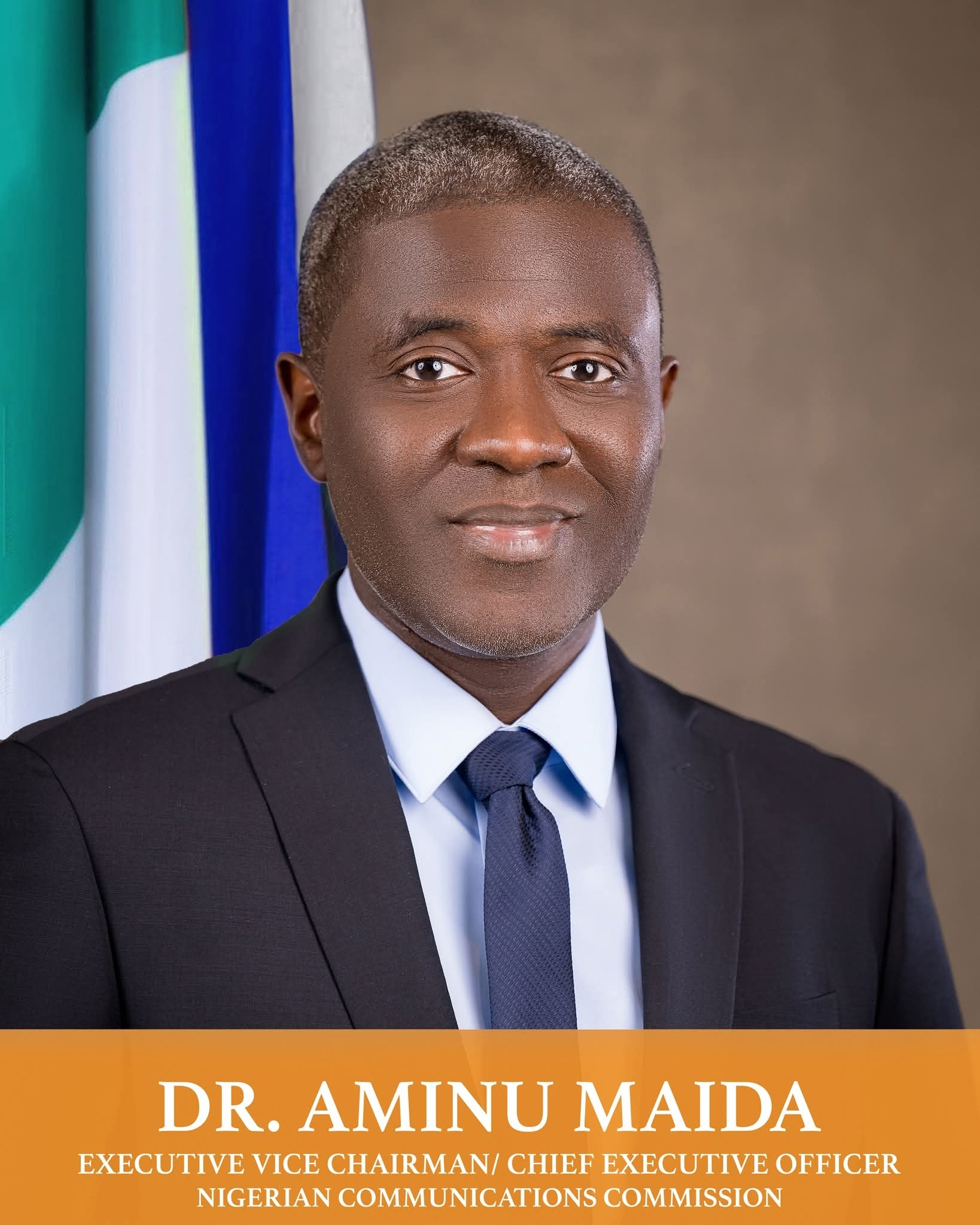
The Nigerian Communications Commission (NCC) has placed broadband at the centre of Nigeria’s push for a $1 trillion economy by 2030, saying connectivity will drive market expansion, productivity, and innovation across every sector.
NCC Executive Vice Chairman and Chief Executive Officer, Dr. Aminu Maida, made the case at a two-day conference of the Financial and Business Online Publishers (FiBOP) in Lagos. He was represented by Mrs. Yetunde Adeyemo, Senior Manager, Regulatory Services.
Maida described digital connectivity as the shared platform that can scale up all parts of the economy. A trader in Lagos, a farmer in Nasarawa, a fashion designer in Aba, a content creator in Kano, or a software developer in Kaduna, he said, can use broadband to reach customers, receive payments, advertise, manage logistics, and plug into wider value chains.
“Without broadband, many businesses remain local. With broadband, they can become national, regional, and global,” he said.
Broadband, according to him, lowers transaction costs, speeds up service delivery, improves inventory management, supports remote work, enables digital records, and makes business processes more efficient—especially for micro, small, and medium enterprises, which remain central to jobs and enterprise in Nigeria.
He also stressed that the digital economy flourishes only where developers, startups, researchers, creators, and entrepreneurs have affordable and reliable access to data. From fintech and edtech to agritech, healthtech, and creative technology, he noted, innovation depends on connectivity—and communications infrastructure such as fibre networks, towers, satellites, and spectrum provides the backbone for data, voice, and video.
Beyond growth, Maida said broadband strengthens digital inclusion and public service delivery. Economic growth that leaves large sections of the population behind, he warned, cannot produce sustainable national prosperity. Broadband, he added, can help tackle socio-economic challenges through job creation, digital literacy, financial inclusion, education, identity management, and better living standards.
“Digital government services depend on connectivity. Education platforms, emergency communications, health systems, identity services, security coordination, public records, and regulatory services are all improved when citizens, institutions, and communities are connected,” he stated.
He called for deliberate action on digital inclusion, noting that market forces alone will not connect every community or empower every citizen. He cited the NCC’s Digital Awareness Programme, which provides secondary schools with ICT resources and internet connectivity. Since it began in 2006, more than 300 schools across Nigeria’s six geopolitical zones have benefited.
“The journey to a trillion-dollar economy begins with people, especially young people. If Nigeria’s youth are digitally skilled, digitally connected, and digitally confident, they will become creators of value rather than mere consumers of technology,” Maida said.
Despite the promise, he acknowledged that broadband expansion still faces high Right-of-Way charges, infrastructure vandalism, fibre cuts, multiple taxation, high deployment costs, power supply constraints, and uneven rural coverage. These, he said, raise service costs and slow expansion into underserved and unserved areas.
He called for sustained engagement on harmonised Right-of-Way processes, one-stop approval systems, dig-once policies, protection of telecoms infrastructure, standardised deployment processes, and stronger collaboration with state governments.
“Telecommunications infrastructure is critical national infrastructure. Networks are no longer optional facilities. They are the roads, bridges, and power lines of the digital age. Damage to fibre infrastructure does not affect operators alone; it affects banks, hospitals, schools, businesses, security communications, online publishers, government services, and ordinary citizens,” he warned.
Maida urged government at all levels, operators, infrastructure companies, content providers, the media, and citizens to work together to create an enabling environment, invest in coverage and quality, deepen fibre reach, produce relevant local services, and protect telecom infrastructure as a shared national asset.
Addressing online publishers and financial and business journalists, he said: “You shape narratives, interpret data, explain policy, and help the public understand the link between connectivity and prosperity. In an economy increasingly driven by information, credible publishing is itself a form of infrastructure.”
For the $1 trillion target, Maida listed priorities including deeper broadband penetration in underserved communities, better Quality of Experience, migration from legacy networks to higher-capacity technologies, infrastructure protection, lower deployment costs, digital literacy, consumer protection, cybersecurity awareness, transparency, and trust in the digital ecosystem.
He assured that the NCC will keep promoting competition, protecting consumers, encouraging investment, supporting innovation, and strengthening the resilience of Nigeria’s communications sector through evidence-based regulation, stakeholder collaboration, and market development.
“The pathway to a $1 trillion economy will be built on many pillars: agriculture, manufacturing, energy, trade, services, finance, creativity, and technology. But digital connectivity will be the common platform that enables all these sectors to scale.
“When we invest in broadband, we are not investing in cables, towers, and spectrum alone. We are investing in productivity. We are investing in jobs. We are investing in education. We are investing in entrepreneurship. We are investing in inclusion. Above all, we are investing in Nigeria’s future,” Maida added.